Local Elections 2026: Listening to locals in Mortlake and Barnes Common

Earlier this year, I decided to push my boundaries in listening to locals, and agreed to stand in the May local elections as a Conservative candidate for Richmond Council in SW London, representing the area where I live, Mortlake & Barnes Common.
I had three motivations. First, I live adjacent to a major redevelopment site (the largest in Richmond and one of the largest in London) which has finally received planning consent after more than a decade of negotiation and a series of planning submissions. This is going to bring lots of opportunities and lots of challenges for our local area over the coming years, and I want to make sure these are addressed in a way that respects local residents.
Second, Richmond Council is essentially a one-party state – of 54 councillors, 49 are LibDem and 5 are Green. Holding the Council to account in decisions impacting our fast-changing community is more important than ever, and I can offer a local, informed and loud voice to do this.
And third, I really love where I live. I want to do what I can to ensure the big changes ahead – mainly the redevelopment of the brewery site – take place in a way that respects our local community, minimises disruption and delivers an outcome that improves all of our lives.
There’s a lot to play for in these elections, not just in Richmond but across London and indeed across communities throughout the nation. I see everyone as a floating voter and am approaching this election from an entirely local perspective. As Hugo Rifkind pointed out recently in the Times, local politics are about the stuff of daily life – like potholes and bins, despite what’s going on in the wider world.
Local politics in Richmond reflect the borough’s superlative status amongst other London boroughs in many areas, including voter turnout -- in the last local elections in 2022, Richmond had the highest turnout in London at 47.7%. Its residents are also the happiest, have the longest healthy life expectancy, and live in the only London borough to be designated a Blue Zone. To most outsiders, there doesn’t appear to be a lot to complain about, or an insurgent movement for change.
Mortlake & Barnes Common, where I’m standing, is one of 18 wards that make up Richmond Council. It has unusually well defined and visual boundaries -- the river Thames to the north, the Richmond-Waterloo railway line to the south, Chiswick Bridge to the west and Barnes Bridge to the east. It’s a good example of geography as destiny – the river Thames was essential to the vibrant brewing and tapestry weaving industries which defined the area for more than two centuries. Much of the housing, street layout and infrastructure in the area reflects this.
The river and the brewery continue to dominate local issues and are at the forefront of most residents’ minds in this election as the regeneration of the former Stag brewery and the continued closure of Hammersmith Bridge to motorised traffic bring daily and future challenges.
Stag Brewery regeneration
In 2015, Anheuser-Busch InBev, a leading global brewer, stopped production at the Stag Brewery in Mortlake and sold the 22-acre site to City Developments Limited, a Singapore-based listed property developer. Its UK subsidiary, Reselton Properties, immediately began plans to redevelop the site as a residential neighbourhood of 850 homes supported by shops, cinema, public spaces and a school. It submitted its first planning application to Richmond in early 2018.
This beget an eight-year process of planning applications, mayoral call-ins, judicial reviews and referrals to the Planning Inspectorate, which I have written about several times over the last few years. Planning consent was finally granted in 2025, for a revised development that now contains 1,075 homes. Whether the Stag brewery redevelopment is a living example of all that’s wrong with our planning process is debatable – what is not is the fatigue, anger and even fear felt by local residents.
The current status remains unclear, despite the certainty of planning consent. As the local community group describes it, Stag ping-pong persists. The most recent development was the cancellation of the proposed school on the site, which has been a blow to some but also an opportunity to look again at the plans and at the release of a large tranche of Section 106 funds.
Hammersmith Bridge
The closure of Hammersmith Bridge in 2019 is another long-running saga that directly impacts our area and which, like the brewery, underpins rising fatigue and anger amongst local residents. Unlike the brewery though the bridge closure – and the inaction to repair it that has followed – has become more than an inconvenience and a source of local and national shame, revealing systemic weaknesses in delivering infrastructure across London and the nation.
The bridge is owned by the London Borough of Hammersmith & Fulham, and while Richmond Council is not responsible for the repair, it feels the impact of the closure acutely, particularly through residents of Barnes and Mortlake who have established an active campaign to repair the bridge. Seven years on from its closure, and with no plans for its repair, the bridge now supports pedestrians and cyclists, but not any form of motorised traffic. This, not surprisingly, drives a contentious debate between cycling campaigners who see the bridge’s future as car-free and other campaigners, including elderly and disabled residents, who demand at the very least transit for buses and emergency vehicles.
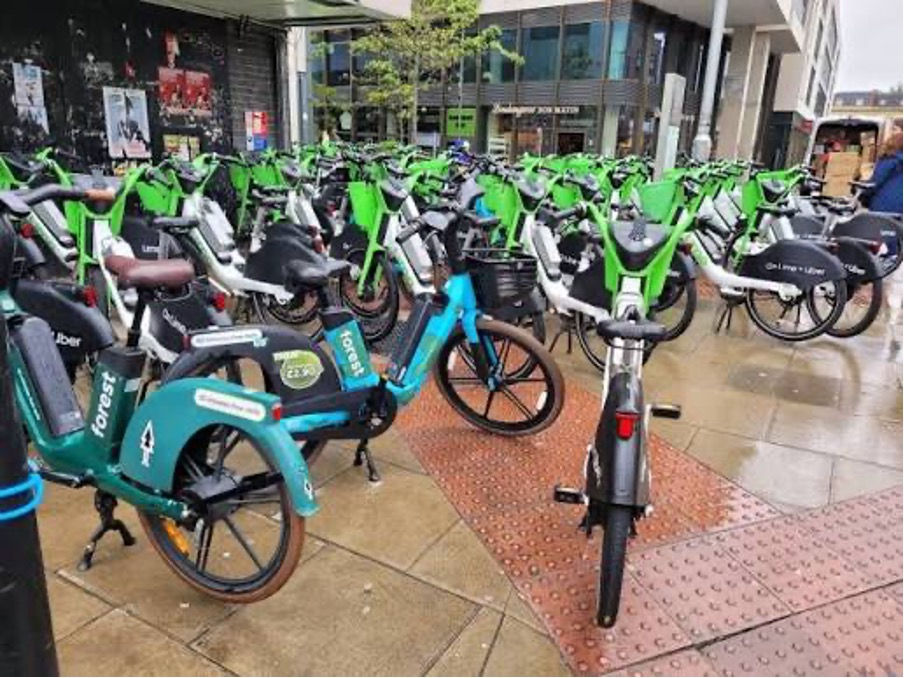
The situation has been aggravated, just in time for the election, by Richmond Council itself, which announced earlier this month that it planned to end its contract for e-bike provision with Lime and to award sole provider status to Forest.
This decision, which applies borough-wide, disproportionately impacts users in Mortlake and Barnes who regularly use Lime bikes to transit the bridge to Hammersmith and the Piccadilly, District and Hammersmith & City tube services. Residents have reacted with a petition urging Richmond Council to rethink the ban on Lime bikes which the council described as an exercise in “corporate bullying” by Lime. This was not popular with local residents, myself included, and I was pleased that my letter to the Times on the matter was published and widely shared.
Council tax increases
Council tax rises in an affluent borough may not garner much sympathy, but in the case of Richmond it reveals a more widespread situation that should inspire everyone to scrutinise their local authority’s sources and uses of funds.
For the record, Richmond residents pay the highest rate of council tax amongst all London boroughs (another superlative position) and have recently been hit with the highest increase (again). Why? Because like all local authorities across the country, Richmond is losing a big chunk of revenue from central government -- and, maintaining its superlative status, its lost chunk is the largest in the land. Last year it received £48.1m in block funding from the government. By 2028/29, this is projected to fall to just £4.7m. This means that council tax (and other forms of revenue) must make up the shortfall – hence the high tax rise.
Residents are understandably getting more interested in how this money is spent in their local area, and demanding more transparency and better communication around council budgets.
So what have I learned from weeks of listening to locals in Mortlake and Barnes Common? A lot, in both form and content.
In terms of content, the brewery and bridge and the fallout from both of these dominates, although I’m hearing more and more about crime hotspots – some involving car and package theft and others involving local drug dealing. The lack of police action to respond and prevent this has been a common theme.
But it’s the form, or how I’m learning about local concerns that is most revealing. Meeting people where they are has opened up many personal conversations that have, overall, been truly heartening.
And where are they? At home, obviously, and engaging with residents “on the doorstep” is perhaps the essence of local campaigning. I’ve done a lot of that, and will continue to do so in this final week before the elections. But I’ve also met lots of people in local pubs, in the parks after school, along the towpath while dog-walking, at the local farmers’ market and, actually simply walking on the street.
Lime bike users are a target for animated conversations around the situation described earlier, and hyper-local groups on Facebook have generated some fascinating and animated conversations (and even some invitations to the pub).
The point here is that each location where you meet people demands a different approach to engagement. People are generally more guarded on the doorstep than in the pub or out and about in the park, for example. And online is very different. I’ve found my best conversations are inspired by content that I’ve shared which celebrates our area, or reveals historical facts and places. Mortlake abounds in this, and sharing content about the tidal Thames, or Watney’s Red Barrel Beer or Sir Richard Burton’s mausoleum arouses curiosity and a willingness to engage.
The elections are next week. How I do is in the voters’ hands, and I’ll continue to listen to locals with intent and enthusiasm over the coming week. It’s been a pleasure, because what I’m experiencing is that
· People are basically decent and want the best for their neighbours and community
· People generally embrace an opportunity to share their views and discuss them with civility and respect
· People see these local elections as less about filling a vacuum in no 10 or nationally and more about repairing and reinforcing the fabric of our communities
And finally – if you can, get out and VOTE on May 7 th.. The future of your local area depends on it.
Clare Delmar
Listen to Locals
April 30 2026