The Heat is Rising

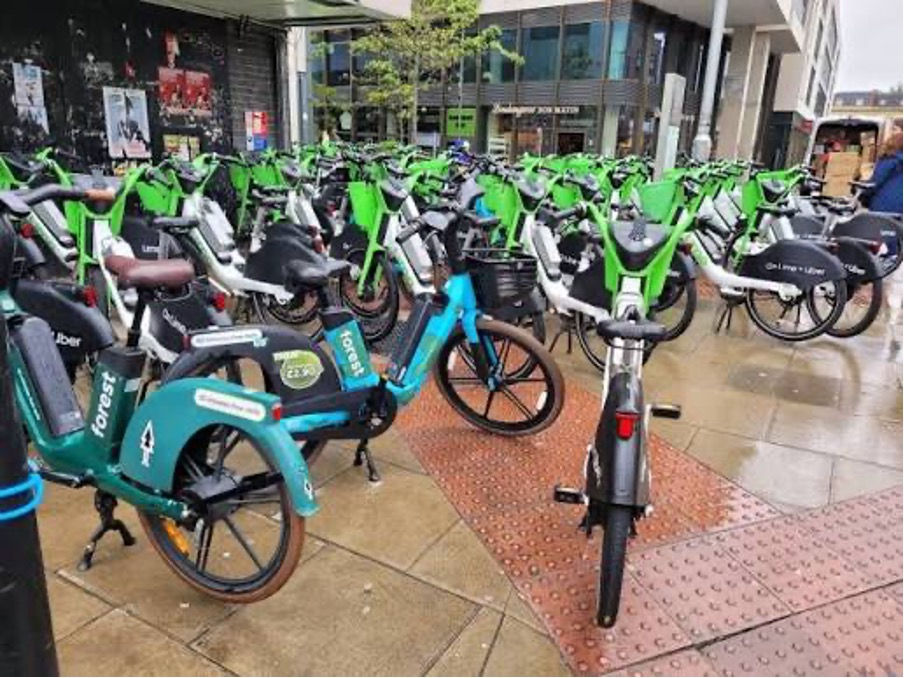
This week saw the highest recorded temperatures for May in the UK -- 34.8C on Bank Holiday Monday, surpassed on Tuesday at 35.1C. Both temps were recorded at Kew Gardens in the London Borough of Richmond-upon-Thames where, I can assure you having taken the photo above, residents were not that bothered.
Richmond abounds in green spaces, blue spaces, social spaces and sporting spaces and, not surprisingly, has one of the highest rate of healthy life expectancy in the country. It’s also recognised as a Blue Zone and ranks fifth in the country on the UK Better Lives Index, produced by the International Longevity Centre to demonstrate how place continues to shape health, opportunity and ageing – and where change is most urgently needed.
Richmond is better equipped than most places in the UK to cope with a future where rising heat is the new normal, and we can all learn from it.
UK heat records are not just being broken, but smashed, according to the BBC. And just in time, a report has been released this week by the Climate Change Committee, an independent advisor to the government, which calls for widespread air conditioning and government-set maximum temperatures in working environments.
In quick response, the leader of the Conservative Party called for lifting the ban on air-conditioning in new homes. Other organisations are calling for a redress of the “AC gap”, which in London costs millions per year in lost productivity.
But as Martin Prince-Parrott, author of Urban Healthonomics, points out, much of the impacts of heat are felt in cities due to the Urban Heat Island effect, and these are not simply fixed by introducing more AC.
This effect describes urban areas becoming heated ‘islands’ amidst cooler rural surroundings, and is the result of “a unique blend of factors enmeshed with city life and urbanisation”, according to Prince-Parrott. These include:
· Materials and surfaces: Urban materials like pavement and concrete absorb and retain heat, causing urban surface temperatures to remain elevated, even after sunset, resulting in cities that never quite cool down.
· Urban geometries: Tall buildings create an urban canyon effect, obstructing airflow and trapping heat and pollutants at ground level.
· Anthropogenic heat: Human activities in cities, from transportation to air conditioning, generate heat that contributes to raising local temperatures.
· Urban greenhouse effect: Elevated levels of pollutants and moisture in urban areas contribute to an urban greenhouse effect, further exacerbating heat retention and air quality issues.
Urban Healthonomics devotes an entire chapter to how cities can and must cope with rising heat, with evidence and recommendations centering on design, policy and entrepreneurship. Prince-Parrott emphasises the role of the built environment, which he argues can either amplify or reduce the urban heat island effect through “cooling interventions” such as urban trees, shading design and technology and green infrastructure as investments that generate economic returns and healthier populations.
Fortunately, there are organisations advocating for and advancing these interventions in the UK which we can all support.
1. Urban trees can mitigate both air pollution and urban heat at the neighborhood scale, and the UK has done a pretty good job at this. In fact, 26 UK towns and cities were named “Tree Cities of the Year” in 2025 by Trees for Cities, a UK charity building a movement for urban trees and tree equity across places and communities. It runs a number of specific initiatives aimed at local communities including a national street tree sponsorship scheme and several opportunities to get involved.
2. Blue spaces refer to outdoor environments, natural or man-made, that prominently feature water -- and there is ample evidence of their impact on urban cooling and the health and wellbeing of city dwellers. As an island the UK is blessed with coastal spaces and the industrial heritage of its major cities is reflected in the development of rivers and canals. In London, access to the river Thames has improved considerably over the last decade through initiatives from the Port of London Authority, the Thames Tideway project, Thames 21 and the Canal & River Trust. Making London more swimmable is a desirable and attainable goal as our summers get hotter, and mission-driven organisations such as Swimmable Cities, Thames Baths floating Lido and Sea Lanes Canary Wharf are on the case.
3. Discussions on the UK’s housing crisis tend to focus on the quantity and affordability of homes, but the quality of homes is a key aspect that rears its ugly head as the heat rises. The Town & Country Planning Association has been dedicated to raising awareness and drafting legislation to promote healthy homes for several years. Its blog series on thermal comfort in homes addresses the challenge of more than half of UK homes which fail to meet bedroom overheating criteria, and an estimated 791 deaths occur annually due to excessive heat. While AC may be an appropriate solution in some cases, heat pumps are an energy-efficient way to cool homes. The UK government’s Boiler Upgrade Scheme has recently been expanded to include air-to-air heat pumps that take heat energy from the outside air and use it to heat up air that is then circulated around your home in winter, and in summer, reverses the process to take heat from inside your home and expel it outside, thus reducing the indoor temperature – similar to the process that happens inside your fridge.
4. Another approach to cooling buildings is through district cooling systems that provide chilled water for indoor cooling purposes to industrial, commercial and residential buildings through a closed-loop pipe network. As Martin Prince-Parrott describes in Urban Healthonomics, London has one at work in Kings Cross known as the “cooling pod” it’s seamlessly integrated with four commercial buildings and three residential buildings, delivering efficient cooling solutions that enhance comfort and sustainability across the community. More importantly, the benefits of district cooling extend far beyond temperature regulation to include energy efficiency, customer cost savings, and reduced capital and operational expenditure for providers.
According to Prince-Parrott, district cooling systems can play an important role in mitigating the Urban Heat Island effect”:
“By consolidating cooling infrastructure into a few centralised locations, they eliminate the noise and vibration generated by scattered air-conditioning plants, prevent cities from being saturated with chillers that release excess heat into the atmosphere, consequently contributing to a warmer urban climate.”
He cautions:
"Despite their numerous advantages, fifth-generation district heating and cooling systems have not gained widespread popularity, although there isa gradual shift in this trend. Designers should prioritise the integration of these systems into their designs or establish connections to them. Whilethere have been technical challenges in the past, the substantial benefits are undeniable, as evidenced by recent successful implementations like the King’s Cross ‘cooling pod’ in London, which serves as a promising case study."
It's clear that we must embed heat mitigation into the design of homes and places in the UK. Places like Richmond show us natural features that do this and can be leveraged to support good health and longevity, and Urban Healthonomics shows us that there are design, policy and entrepreneurial interventions that can mitigate the negative effects of heat to make our cities and neighbourhoods more liveable.
Stay cool, stay hydrated, stay positive
Clare Delmar
Listen to Locals
28 May 2026